
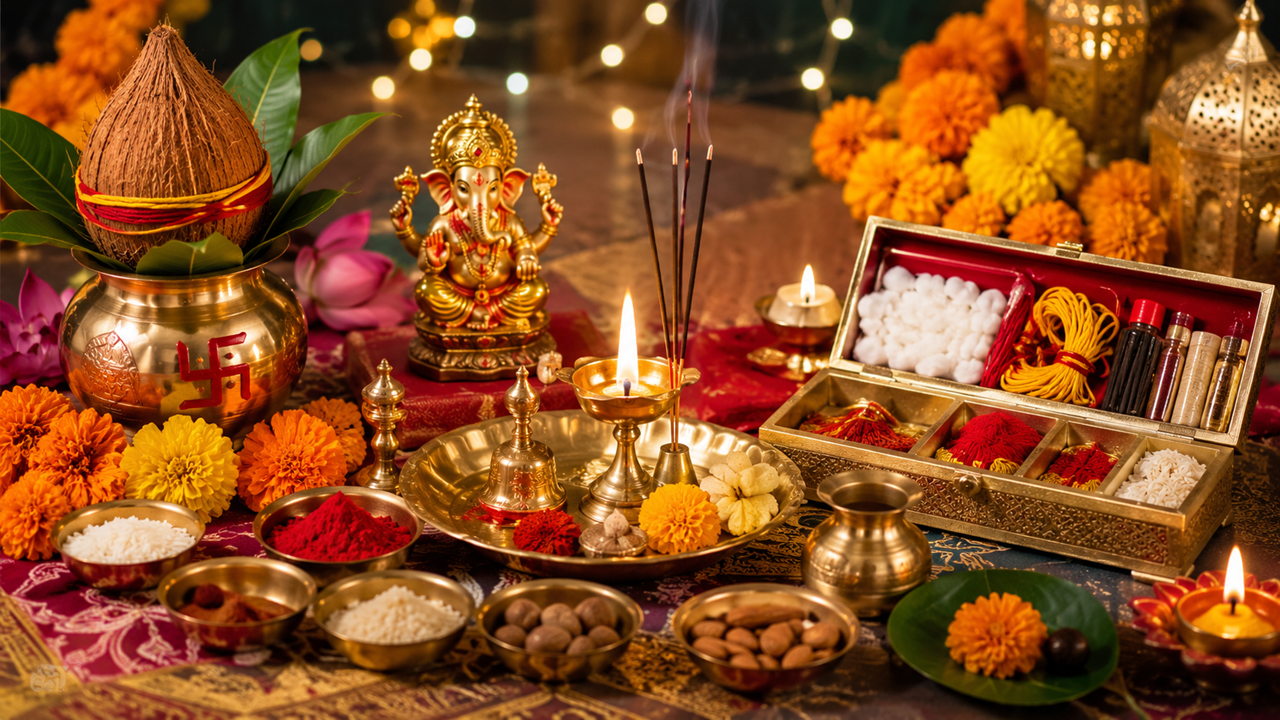
Diwali Pooja Samagri Checklist: Everything You Need This Year
Diwali is just around the corner, and every home is getting busy with cleaning, shopping, and decoration. But before the diyas are lit and the rangoli is drawn, there is one job that comes first: getting your pooja samagri ready. If you have ever run around at the last minute looking for kumkum or a missing diya, this checklist is for you.
In this blog, we have made a simple and complete Diwali pooja samagri checklist for 2026. You can print it, save it, or just read it once and shop with confidence. Whether you are doing a small home pooja or a big family celebration, this list covers everything you need for Lakshmi Puja, Ganesh Puja, and the small rituals that make Diwali special.
This guide is written in simple words, so you can share it with anyone at home, including elders who are doing the shopping and younger family members who are helping with decoration. By the end of this blog, you will have a clear picture of every item, how many diyas to plan for, and the simple steps to follow on the day of pooja.
Why a Pooja Samagri List Helps Every Year
Diwali shopping markets are crowded, and shops run out of small items fast. If you make a list early, you save time, save money, and avoid the stress of running between shops on the day of pooja. A list also helps you remember items that are easy to forget, like akshat (rice) or a coconut, because everyone is busy with bigger things like sweets and clothes.
Many families also follow traditions passed down from their elders. Having a written checklist means nothing important gets left out, no matter how busy the festival season gets.
Another benefit of planning ahead is that you can shop in smaller batches over a few weeks instead of one big rush. You can pick up diyas and decoration items early, then leave only the fresh items like flowers and fruits for the last day or two. This way, Diwali shopping feels enjoyable instead of stressful.
Complete Diwali Pooja Samagri Checklist
Here is the full list of items you will need for Lakshmi Ganesh Pooja on Diwali night. We have grouped them by use so shopping becomes easier.
Idols and Pictures
• Goddess Lakshmi idol or picture
• Lord Ganesh idol or picture
• Goddess Saraswati idol or picture (optional, in many homes)
• Kuber idol or picture (for wealth, optional)
Basic Pooja Items
• Roli or kumkum
• Haldi (turmeric) powder
• Chandan (sandalwood paste)
• Akshat (raw rice mixed with turmeric)
• Abeer and gulal (coloured powders)
• Janeu (sacred thread) for the idols
• Moli or kalava (sacred red thread)
• Supari (betel nuts)
• Paan leaves (betel leaves)
• Coins, preferably new or silver coins
Diyas, Lights and Incense
• Clay diyas (as many as you need for the house and pooja)
• Cotton wicks (baati)
• Pure ghee or mustard oil for diyas
• Matchbox
• Camphor (kapoor)
• Incense sticks (agarbatti)
• Dhoop sticks or dhoop cones
• A small aarti lamp (aarti thali with diya holder)
Flowers and Leaves
• Fresh flowers (marigold is most common)
• Mango leaves or ashoka leaves for the toran
• Lotus flower, if available (considered auspicious for Lakshmi)
• Durva grass (for Ganesh pooja)
• Bel patra (optional, in some traditions)
Fruits, Sweets and Offerings
• A coconut (whole, with husk)
• Seasonal fruits (5 types is common, but any fresh fruit works)
• Sweets (mithai) for the bhog
• Batashe or misri (sugar candy)
• Dry fruits
• Puffed rice (lava) and batashe, used in many regions
Cloth and Decoration Items
• Red cloth or asan for placing the idols
• Yellow or red cloth for covering the pooja table
• A small mirror (used in Lakshmi pooja in some traditions)
• Kalash (metal pot) with a coconut on top
• Mango leaves to decorate the kalash
• Rangoli colours for the entrance
• String lights for decoration
• Toran or door hanging
Other Useful Items
• A small bell (ghanti) for aarti
• A copy of the Lakshmi Aarti or pooja vidhi book
• A plate (thali) for keeping all samagri together
• A spoon for ghee (used during havan or diya lighting)
• Cotton balls or cloth for cleaning idols before pooja
• A small bowl for water (jal)
• Gangajal (Ganga water), if you wish to use it for purification
Diyas for Every Corner of the House
On Diwali night, diyas are lit not just for the pooja table but for the whole house. It is a nice idea to plan how many diyas you will need so you don't run short halfway through. Here is a simple guide many families follow.
|
Area of the Home |
Suggested Number of Diyas |
|
Main entrance / door |
2 to 5 |
|
Pooja room or pooja table |
5 to 11 |
|
Windows |
1 per window |
|
Balcony or terrace |
5 to 10 |
|
Tulsi plant or garden area |
1 to 2 |
|
Staircase or hallway |
3 to 5 |
These numbers are only suggestions. You can use more or fewer diyas based on the size of your home and your family's tradition.
Simple Steps to Set Up Your Pooja
Once you have collected all the samagri, setting up the pooja is not difficult. Here is an easy step-by-step way to arrange everything.
1. Clean the pooja area and place a red or yellow cloth on the table.
2. Place the idols of Lakshmi and Ganesh on the cloth, with Ganesh on the left side of Lakshmi.
3. Keep the kalash with mango leaves and coconut next to the idols.
4. Arrange flowers, fruits, and sweets around the idols.
5. Light the diyas and incense sticks before starting the aarti.
6. Apply roli and akshat to the idols and to the kalash.
7. Offer the bhog (sweets and fruits) to the deities.
8. Perform the aarti with the whole family and ring the bell.
9. Distribute prasad to everyone after the pooja.
Easy Tips for Buying Pooja Samagri
• Buy diyas and earthen items a few days early, as good quality diyas sell out fast closer to Diwali.
• Keep a separate small box for samagri items like roli, akshat, and supari so they don't get mixed with kitchen items.
• Buy fresh flowers and fruits only one or two days before Diwali so they stay fresh for the pooja.
• If you are buying idols, check that the colours and finishing are neat, since these idols are often kept for many years.
• Keep extra matchboxes and wicks at home, since these are the items people forget to buy the most.
• Support local sellers and artisans for diyas, toran, and rangoli colours, as many of these are still handmade.
Samagri Items That Change by Region
India is a large country, and Diwali pooja samagri can change a little from one region to another. In some homes in Rajasthan and Gujarat, businesspeople also worship their account books (chopda) along with Lakshmi Puja. In Bengal, Diwali is celebrated as Kali Puja, with a different set of samagri items. In South India, some families add items like turmeric plant leaves and special sweets made for the day.
If your family follows a specific tradition, it is always good to check with elders at home about any special items they add to the pooja. This checklist covers the most common items used across India, and you can add a few extra based on your own customs.
Extra Items If You Celebrate Dhanteras and Bhai Dooj Too
In most parts of India, Diwali is not just one day. It is a five-day festival that starts with Dhanteras and ends with Bhai Dooj. If your family celebrates these days as well, a few extra items are worth keeping ready alongside your main samagri list.
• New utensils or a small silver item, bought on Dhanteras for good luck
• A small lamp made of flour and ghee, lit outside the house on Dhanteras night
• Extra diyas for Naraka Chaturdashi, also called Choti Diwali
• Items for Govardhan Puja, such as cow dung models, if followed in your family
• A tika and rakhi-like thread for Bhai Dooj, along with sweets for brothers and sisters
You don't need to buy all of these at once. It often helps to plan day by day, so the samagri for each ritual is ready exactly when you need it, without overcrowding your shopping list.
Frequently Asked Questions
What is the most important item in Diwali pooja samagri?
The diya is considered the most important item, since lighting diyas is the main act of Diwali. Along with this, the idols of Lakshmi and Ganesh and fresh flowers are also seen as essential.
Can I do Diwali pooja without a priest?
Yes, many families perform a simple Lakshmi Ganesh pooja at home without a priest. You can follow an aarti book or a pooja vidhi guide and perform the rituals together as a family.
How many diyas should I light on Diwali?
There is no fixed number. Many people light diyas at every entrance, window, and corner of the house. What matters most is doing it with devotion, not the exact count.
What should I buy first for Diwali pooja?
Start with diyas, idols, and decoration items, since these sell out fast closer to the festival. Fresh items like flowers, fruits, and sweets can be bought one or two days before Diwali.
Is it necessary to buy a new idol every year?
No, it is not necessary. Many families keep the same idols for many years and simply clean and decorate them again each Diwali. Some people do choose to bring a new idol home as a symbol of new beginnings.
Final Thoughts
Diwali is a festival of light, family, and gratitude, and a well-prepared pooja makes the celebration even more special. With this checklist, you don't have to worry about missing any item or running to the market at the last moment. Keep this list handy, shop a little early, and enjoy the festival with your loved ones.