
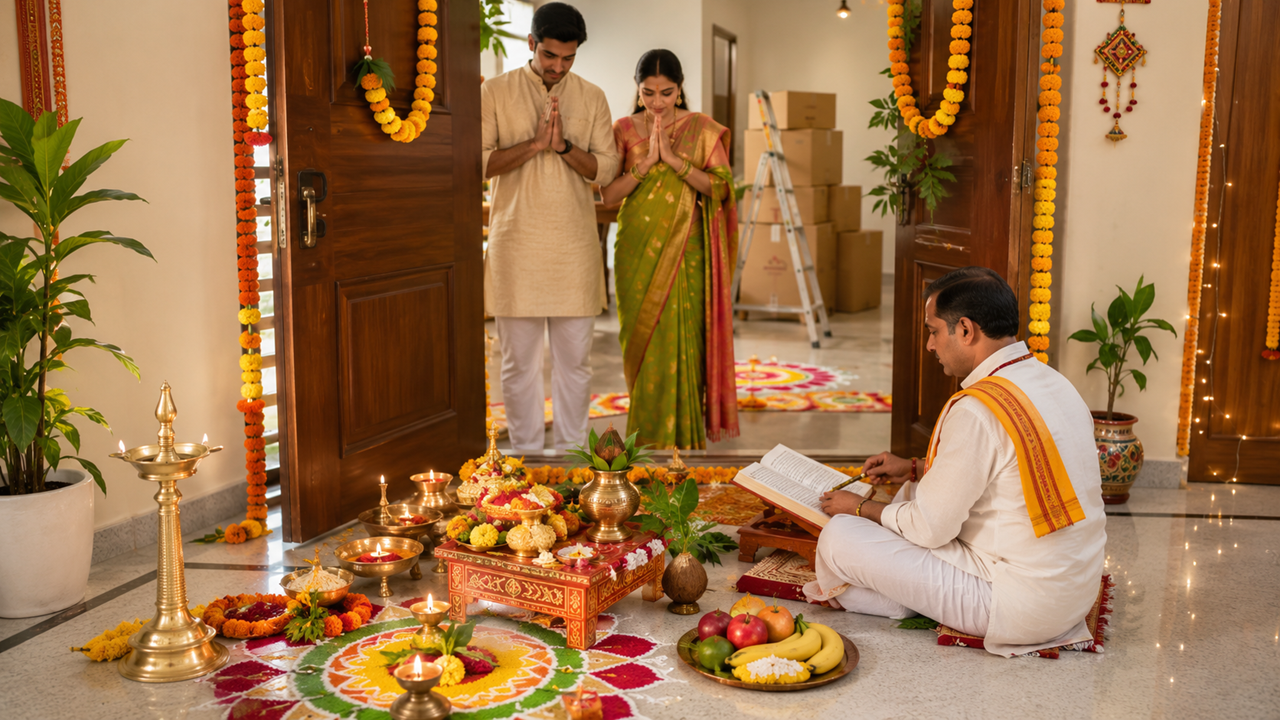
Griha Pravesh Pooja: Step-by-Step Ritual Guide for a New Home
Moving into a new home is a big moment in life. It is exciting, but it can also feel a little overwhelming. There are boxes to unpack, furniture to arrange, and a hundred small things to plan. Before all of that begins, most Indian families follow one important tradition first: the Griha Pravesh Pooja.
Griha Pravesh means "entry into the house." It is a sacred ceremony performed before a family starts living in a new home. The pooja is done to remove negative energy, seek blessings from the gods, and invite peace, health, and prosperity into the house. It is one of the sixteen important Hindu rituals, known as Shodasha Samskaras.
If you are planning to move into a new home soon, this guide will help you understand everything about Griha Pravesh Pooja. We will explain what it means, why it is important, the right time to do it, the items you need, and the complete step-by-step process. By the end, you will feel fully ready for this beautiful ceremony.
What is Griha Pravesh Pooja?
Griha Pravesh Pooja is a religious ceremony performed when a family enters a new house for the first time to live there. The word "Griha" means house, and "Pravesh" means entry. Together, it means the sacred entry into a new home.
This pooja is performed to thank the divine powers for the new home, to purify the house, and to ask for a happy and peaceful life ahead. It is believed that a home which starts with proper rituals and good energy brings good luck and prosperity to the family living in it.
Why is Griha Pravesh Important?
Many people ask why this pooja is needed when the house is already built and ready. Here are the main reasons why Griha Pravesh holds importance in Hindu culture:
• It purifies the home from any negative energy left by construction work or previous use of the land.
• It invites Lord Ganesha's blessings to remove obstacles from the family's new journey.
• It brings good fortune, health, and happiness to everyone who will live in the house.
• It follows Vastu principles, balancing the five elements of nature in the home.
• It marks a fresh and positive beginning for the family in their new life chapter.
• It strengthens family bonding, as relatives and friends often join the ceremony.
Types of Griha Pravesh
Not every Griha Pravesh is the same. Depending on the situation, there are three main types of this pooja:
1. Apoorva Griha Pravesh
This is done when a family enters a newly built house for the very first time. This is the most common and most detailed type of Griha Pravesh.
2. Sapoorva Griha Pravesh
This is performed when a family returns to their old house after a long trip, or after the house has undergone repair work or renovation for a long period.
3. Dwandwah Griha Pravesh
This is done when a family moves into a house due to unavoidable reasons, such as after a natural calamity like a fire or an earthquake that damaged the previous home.
Best Time for Griha Pravesh: Choosing the Right Muhurat
Timing plays a very important role in Griha Pravesh Pooja. Hindu tradition believes that entering a new home at an auspicious time, called "Muhurat," brings extra blessings and good luck.
Here are some points to keep in mind while choosing the date and time:
• Always consult a trusted priest or an astrologer to select the correct Muhurat based on the horoscope of the family members.
• Popular months for Griha Pravesh include Magha, Phalguna, Vaishakha, and Jyeshtha, according to the Hindu calendar.
• Avoid the months of Chaturmas (July to November approximately) and Pitru Paksha, as these are considered less favorable for new beginnings.
• Fridays, Mondays, and Thursdays are usually considered good days for this ceremony.
• Morning hours, especially before noon, are preferred for the actual entry ceremony.
Many families in Jodhpur and across Rajasthan also prefer choosing dates that match with important festivals or family events, making the day even more special.
Things Needed for Griha Pravesh Pooja
Preparing the right pooja items in advance makes the ceremony smooth and stress-free. Here is a simple list of items generally required:
• Kalash (a brass or copper pot) filled with water
• Coconut, mango leaves, and betel leaves
• Idols or pictures of Lord Ganesha and Goddess Lakshmi
• Turmeric, kumkum, rice, and sandalwood paste
• Cow dung and cow urine (Panchgavya) for purification
• Ghee, cotton wicks, and diyas (lamps)
• Milk to boil at the entrance
• Fresh flowers and garlands
• Havan samagri and a small havan kund
• Fruits and sweets for offering (Prasad)
• A new broom, if the family wants to start cleaning rituals
• Bell and other pooja thali items
It is a good idea to prepare a checklist a few days before, so nothing is missed on the day of the ceremony.
Step-by-Step Griha Pravesh Ritual Guide
Now let us go through the full ceremony, step by step, so you know exactly what happens and in what order.
Step 1: Vastu Shanti Pooja
Before entering the house, a Vastu Shanti Pooja is performed to balance the energies of the land and structure. The priest chants mantras to remove any Vastu doshas (defects) in the home's construction. This step is very important because it sets a positive base for the rest of the ceremony.
Step 2: Ganesh Pooja
Every good beginning in Hindu tradition starts with Lord Ganesha. A small idol or picture of Ganesha is placed at the entrance, and prayers are offered to remove any obstacles that may come in the family's new journey.
Step 3: Kalash Sthapana
A Kalash, filled with water, mango leaves, and a coconut placed on top, is set up near the main entrance or the pooja area. This Kalash represents abundance and positive energy flowing into the home.
Step 4: Boiling of Milk
One of the most loved parts of the ceremony is boiling milk on a new stove placed at the entrance of the house. As the milk boils and overflows from the pot, it symbolizes prosperity and abundance flowing into the new home. Many families let the milk boil over on purpose, as this is considered a good sign.
Step 5: Entering the House
The head of the family usually enters the house first, right foot forward, while carrying the Kalash. It is a common belief that the right foot should touch the threshold first, as it represents good energy entering the home before anything else.
Step 6: Havan (Fire Ceremony)
A small havan or fire ritual is performed inside the house. The priest chants Vedic mantras while offering ghee, rice, and other items into the fire. This havan is believed to purify the air of the house and invite positive vibrations into every corner.
Step 7: Lakshmi Pooja
After the havan, prayers are offered to Goddess Lakshmi, who is the goddess of wealth and prosperity. This step is done to invite financial stability and happiness for the family in their new home.
Step 8: Placing the Kalash and Other Items
The Kalash is placed in the kitchen or the pooja room, along with other sacred items. Some families also place a small silver or brass idol of Lord Kuber, the god of wealth, near the entrance for extra blessings.
Step 9: Family Meal
After the pooja is complete, the family and guests usually enjoy a meal together in the new house. This is often the first proper meal cooked and eaten in the new home, and it is considered a happy and joyful moment.
Step 10: Housewarming Celebration
Many families also organize a small get-together with relatives, friends, and neighbors after the pooja. This is a nice way to introduce the new home to loved ones and celebrate the new beginning together.
Simple Dos and Don'ts for Griha Pravesh
Here are some easy tips to remember while planning your Griha Pravesh Pooja:
Dos
• Do clean the entire house thoroughly before the pooja day.
• Do keep the main door decorated with mango leaves, flowers, or a rangoli.
• Do invite close family and friends to be part of the happy occasion.
• Do keep the pooja items ready one or two days in advance.
• Do follow the Muhurat timing suggested by the priest or astrologer.
Don'ts
• Don't shift heavy furniture or start major work before the pooja is complete.
• Don't enter the house with an empty hand; always carry something auspicious like the Kalash or sweets.
• Don't perform the ceremony during Rahu Kaal or other inauspicious timings.
• Don't rush the process; allow enough time for each ritual step.
• Don't forget to keep water and milk ready for boiling at the entrance.
Modern Griha Pravesh: Apartments and Flats
Today, many families move into apartments and flats rather than independent houses. The good news is that Griha Pravesh Pooja can be performed for apartments too, with a few small adjustments.
• The Kalash and milk boiling ceremony can be done at the main door of the flat instead of a large entrance gate.
• A small Vastu Shanti Pooja can still be arranged, focusing on the specific rooms of the apartment.
• Since space may be limited, the havan can be performed in a small, safe container with proper ventilation, or families can choose a symbolic version guided by the priest.
• Society rules about fire and smoke should be checked in advance, especially in high-rise buildings.
Even with a smaller space, the meaning and importance of the ceremony remain exactly the same.
Griha Pravesh for Renovated or Rented Homes
If you are moving into a renovated house, or even a rented home, performing a simple version of Griha Pravesh is still a good idea. It helps in starting fresh with positive energy, even if the house is not brand new.
For rented homes, families often perform a short pooja with the Kalash, a small prayer to Ganesha, and lighting a diya at the entrance. This simple version still brings the same feeling of a fresh and blessed beginning.
Tips to Make Your Griha Pravesh Special
• Choose warm and welcoming decorations like flowers, torans, and diyas at the entrance.
• Play soft devotional music in the background during the pooja.
• Prepare traditional sweets to share with guests after the ceremony.
• Take photos and videos to remember this special day of your life.
• Keep a guest book or small diary where visitors can leave their blessings and wishes for the new home.
Frequently Asked Questions on Griha Pravesh Pooja
1. Can Griha Pravesh be done without a priest?
While it is always better to have a trained priest guide the rituals correctly, a simple version of the pooja can be done by the family with proper knowledge of the mantras and steps.
2. How long does the Griha Pravesh ceremony take?
A complete ceremony with havan and all rituals usually takes around two to three hours, depending on the number of rituals included.
3. Is Griha Pravesh necessary for every new home?
It is not compulsory, but it is a widely followed tradition believed to bring peace, positivity, and good fortune to a new home.
4. Can Griha Pravesh be done in the evening?
Morning hours are generally preferred, but if the Muhurat suggested by the astrologer falls in the evening, it can be performed then as well.
5. What should be carried first while entering the house?
Traditionally, the Kalash filled with water, a coconut, and mango leaves is the first item carried into the house by the head of the family.
6. Who should perform the pooja if the family is small?
Even a small family can perform the ceremony comfortably. The core rituals, such as the Kalash Sthapana, Ganesh Pooja, and havan, do not require a large group of people. A priest can guide just the immediate family through each step.
7. What should be done with the pooja items after the ceremony?
Items like the Kalash and idols are usually kept in the pooja room of the new house. Flowers and other perishable items used during the havan are respectfully disposed of, often by immersing them in a nearby river or garden soil, following local customs.
Significance of Griha Pravesh in Hindu Scriptures
Griha Pravesh finds its roots in ancient Hindu texts and is considered one of the sixteen Shodasha Samskaras, which are important life rituals mentioned in the Vedas and Puranas. These samskaras guide a person through different important stages of life, from birth to marriage to building a home.
According to Vastu Shastra, an ancient Indian science of architecture, every home carries its own energy based on the direction it faces, the placement of rooms, and the flow of natural elements like air, water, fire, earth, and space. Griha Pravesh Pooja works closely with these Vastu principles to balance the five elements and remove any imbalance that may have occurred during construction.
This is why many families also invite a Vastu expert along with the priest, so that both the spiritual and scientific aspects of the home are taken care of together.
Gift Ideas for Griha Pravesh Ceremony
If you are attending someone's Griha Pravesh, choosing the right gift can make the day even more memorable. Here are a few thoughtful gift ideas that are commonly given during this occasion:
• A small idol or wall hanging of Lord Ganesha or Goddess Lakshmi
• Decorative diyas or lamps for the pooja room
• A brass or copper Kalash set
• Home decor items like wall clocks, plants, or wind chimes
• Traditional sweets or dry fruit boxes
• A beautiful doormat or torans for the entrance
Gifts that add positivity and warmth to the new home are always appreciated by the host family.
Final Thoughts
Griha Pravesh Pooja is more than just a religious ritual. It is a beautiful way to begin a new chapter of life with positivity, gratitude, and hope. Whether you are moving into a big independent house, a small apartment, or even a rented flat, this ceremony brings a sense of peace and blessing to your new home.
If you are looking for experienced priests, pooja samagri, or complete wedding and ceremony services in Jodhpur and nearby areas, Jeeman can help you plan a smooth and memorable Griha Pravesh for your family. A well-planned pooja not only follows tradition but also gives your new home a happy and blessed start.