
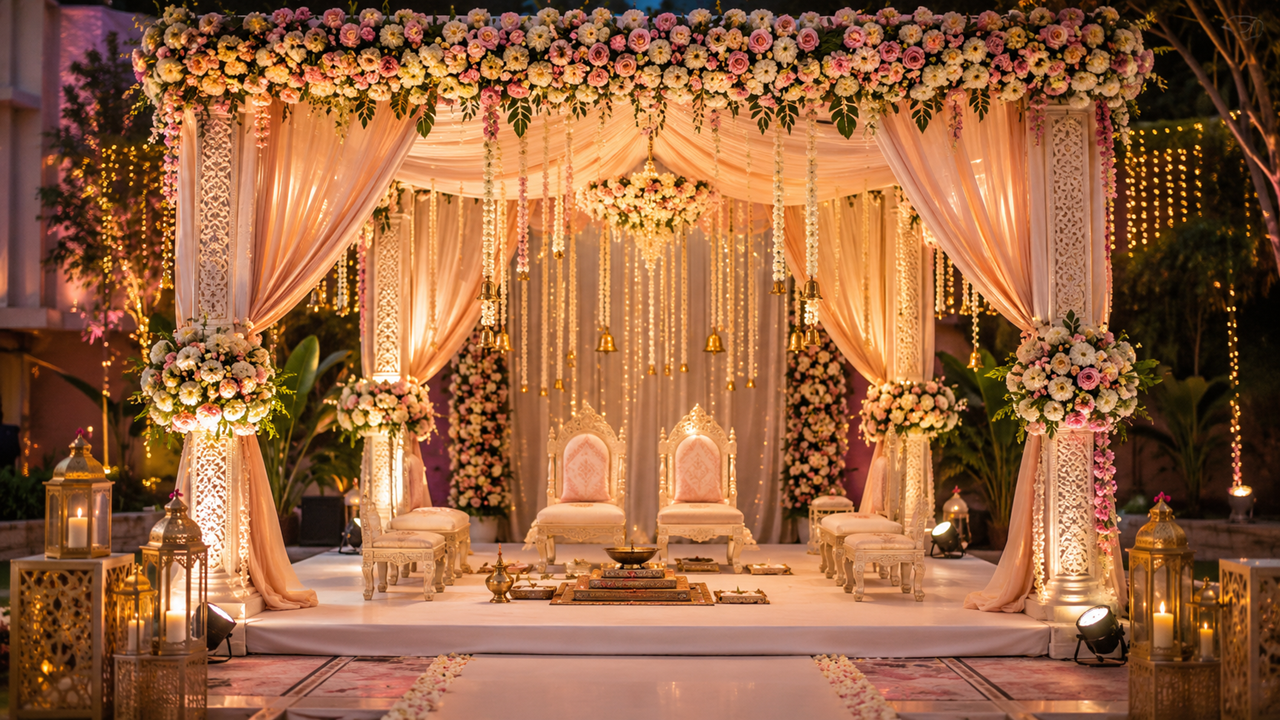
Mandap Decoration Ideas for a Traditional Rajasthani Wedding
A Rajasthani wedding is famous for its colour, its warmth, and its royal touch. Every corner of a Rajasthani wedding feels like a small piece of a palace. And the most special corner of all is the mandap. The mandap is the place where the bride and groom sit for the wedding rituals. It is the heart of the whole wedding. So it is only right that this place gets the most love, the most colour, and the most careful decoration.
If you are planning a Rajasthani wedding, or if you just love the rich Rajasthani style, this blog will give you many ideas for mandap decoration. We will keep the language simple and the ideas easy to use. You can pick and mix these ideas as per your budget, your venue, and your own personal taste. Let us start.
This guide covers everything from colours and fabric to flowers, lighting, furniture, props, themes, budget tips, and small finishing touches. By the end, you should have a clear picture of how you want your own mandap to look, and enough ideas to explain your vision to your decorator, your family, or your friends who are helping you plan.
Why Mandap Decoration Matters So Much
In Indian weddings, the mandap is more than just a decorated stage. It is a sacred space. The rituals like Kanyadaan, Saptapadi, and Agni Pooja all happen inside the mandap. Because of this deep meaning, families want the mandap to look beautiful, but also feel warm and holy at the same time.
In a Rajasthani wedding, this feeling becomes even stronger. Rajasthan has a long history of forts, palaces, and royal families. So when people plan a Rajasthani style mandap, they often try to bring a small piece of that royal history into their own wedding. Bright colours, gold work, mirror art, and rich fabrics are used to give that royal palace feeling.
A well decorated mandap also becomes the main photo spot of the wedding. Guests take pictures near it, and the bride and groom spend the most important hours of their wedding day sitting inside it. So spending good time and thought on mandap decoration is always worth it.
Understand the Traditional Rajasthani Style First
Before we go into ideas, it helps to understand what makes a style 'Rajasthani'. This will help you make choices that feel true to the culture, and not just random decoration.
Rich and Bold Colours
Rajasthani decoration never plays it safe with colour. You will see bright red, deep pink (also called rani pink), orange, mustard yellow, royal blue, and emerald green. These colours are often mixed together in one place, and somehow they still look balanced and beautiful.
Gold and Metal Work
Gold thread work, brass items, and metal jhoomars (hanging lamps) are common. Gold adds a royal shine to every corner.
Mirror Work (Sheesha Kaam)
Small mirrors sewn onto fabric or fixed onto decoration pieces are a very special part of Rajasthani art. When light falls on these mirrors, they sparkle and give a magical look.
Hand Block Prints and Bandhani
Rajasthan is famous for its hand block printed fabrics and bandhani (tie and dye) cloth. These prints carry patterns of flowers, paisleys, and geometric shapes.
Royal Symbols
Elephants, camels, peacocks, and horses are common symbols in Rajasthani art. These animals were part of royal processions in the old days, so they are often used in wedding decoration as a sign of grandeur.
Different Types of Mandap Structures
Before you decide on colours and props, it helps to decide what kind of physical structure you want for the mandap. The structure is the base on which all the decoration sits, so getting this right is the first real step.
The Four Pillar Mandap
This is the most common and most traditional structure. It has four pillars, one at each corner, holding up a canopy or roof. Each pillar can be wrapped in fabric, flowers, or mirror work, and this style works for almost any theme, from royal to rustic.
Dome or Umbrella Mandap
Instead of a flat canopy, some mandaps have a round dome shape, like a small tent. This style looks very grand and works well for outdoor palace or fort weddings, since it mirrors the domes seen in real Rajasthani architecture.
Open Structure Mandap
Some modern couples skip the four pillar look completely and go for an open backdrop style, where there is a decorated wall behind the seating but no full roof. This works well for daytime functions and gives a lighter, airier feeling.
Multi-Tier Mandap
For very grand weddings, decorators sometimes build a mandap with more than one level or tier, with the main seating slightly raised. This adds height and drama, and also helps guests see the couple clearly from a distance.
Once you know which structure suits your venue and guest count, you can then move on to choosing colours, fabric, and props that will sit on top of this base.
Choosing a Colour Theme for Your Mandap
Colour is the first big decision you will make for your mandap. Here are some popular Rajasthani colour themes that work very well.
Red and Gold
This is the most classic combination for an Indian wedding. Red stands for love and good luck, and gold adds richness. Use red fabric drapes with gold borders, gold jhoomars, and red flowers like roses or gerberas.
Pink and Orange
This combination feels very Rajasthani because it reminds people of the pink city, Jaipur, and the orange sunsets of the desert. Use rani pink drapes mixed with orange marigold flowers for a very lively look.
Blue and White
If you want something that feels royal but a little cooler and calmer, try blue and white. This combination reminds people of the blue city, Jodhpur. White flowers with blue fabric and silver work look elegant and fresh.
Mustard Yellow and Green
This combination gives an earthy, festive feeling. It works very well for daytime weddings or haldi and mehendi functions held close to the wedding day.
Multi-Colour Rajasthani Mix
If you love the true Rajasthani spirit, do not stick to just two colours. Mix red, pink, orange, yellow, and green fabrics together in the drapes and hangings. This gives a busy, joyful, festival-like look that feels very authentic.
Ivory and Gold
For a softer, more graceful look, ivory or off white fabric paired with gold work and pale flowers can feel very royal without being too loud. This theme suits couples who want a Rajasthani touch but with a more toned down colour palette.
Maroon and Emerald Green
This deep, jewel-tone combination feels very rich and is often seen in old royal paintings from Rajasthan. It works beautifully for evening weddings with warm lighting, as the deep colours glow nicely under golden light.
Whatever colours you choose, try to keep at least one colour consistent across the mandap, the walkway, and the stage area used for other functions. This creates a sense of flow through the whole wedding venue, rather than each area feeling separate and unrelated.
Fabric and Drapery Ideas
Fabric is the base of any mandap design. The way fabric is draped can completely change the look of the mandap.
● Layered drapes: Use two or three fabric colours layered one over another for a rich look. For example, a base of gold with an overlay of red and pink.
● Bandhani drapes: Use bandhani print fabric as the main backdrop. This adds an instant Rajasthani identity to the mandap.
● Umbrella style canopy: Many Rajasthani mandaps use a round or dome shaped canopy made of pleated fabric, similar to a royal tent (shamiana).
● Hanging fabric flowers: Fabric flowers made of silk or organza can be attached to the drapes for a 3D effect without needing fresh flowers everywhere.
● Zari and gota patti borders: Adding shiny borders to plain fabric drapes gives them an instant festive touch.
A good tip is to choose fabric that suits your venue's weather. If your wedding is outdoors in Rajasthan's heat, choose lighter fabrics like cotton silk or organza. If it's an evening or winter wedding, heavier fabrics like velvet and silk look more grand.
Also think about how the fabric will move. Outdoor venues often have wind, so very heavy drapes may not flow well, while very light fabric may fly around too much. A cotton silk blend usually gives a nice middle ground, holding its shape while still moving gently in the breeze, which adds a soft, alive feeling to the mandap in photographs and videos.
Texture is another point worth thinking about. Mixing a shiny fabric like satin with a matte fabric like cotton, or a rough textured fabric like jute in small amounts, adds depth to the mandap instead of everything looking flat and the same.
Floral Decoration Ideas
Flowers bring life, fragrance, and softness to the strong colours and heavy fabrics of a Rajasthani mandap. Here are some floral ideas that pair well with the Rajasthani theme.
Marigold Magic
Marigold flowers, in orange and yellow, are a true symbol of Indian weddings. They can be used as garlands, hanging strings, or even as a full flower wall.
Rose Petals and Roses
Red and pink roses add romance to the mandap. Rose petals can be used to fill the floor around the mandap or scattered on the steps leading to it.
Mix of Fresh and Artificial Flowers
To save cost and also make the flowers last longer, many couples now mix fresh flowers with good quality artificial ones. Guests usually cannot tell the difference from a distance, and the mandap still looks fresh throughout the ceremony.
Floral Chandeliers
Hanging flower chandeliers above the mandap look stunning in photos, especially when paired with fairy lights or small hanging lanterns.
Floral Jhoomar Corners
Each pillar of the mandap can have a hanging floral jhoomar (a round hanging arrangement) instead of plain flower garlands. This gives a more structured and elegant look.
Flower Curtains at the Back
Instead of a plain fabric backdrop, some couples use a full curtain made of strings of flowers behind the seating. This is especially popular with jasmine, marigold, and small white flowers, and it also carries a lovely fragrance through the whole ceremony.
Local and Seasonal Flowers
Choosing flowers that grow locally in Rajasthan during your wedding season, such as marigold, rose, and jasmine, usually works out cheaper and fresher than importing flowers from far away. Local flower markets in cities like Jaipur are also known for offering a wide range of colours at good prices.
Mirror Work and Sheesha Decor
Mirror work is one of the most special features that can make a mandap feel truly Rajasthani. Rajasthan's Sheesh Mahal (palace of mirrors) in Amer Fort is a famous example of how beautiful mirror art can look.
● Mirror work cushions placed near the mandap seating.
● Mirror embroidered fabric used in the backdrop or canopy.
● Small round mirrors hung together in strings, like curtains, that sparkle with the lights.
● Mirror work wall panels or jharokha (window) shaped cutouts placed behind the couple's seating.
Mirror decoration works best with warm lighting. Yellow or golden lights make the mirrors twinkle beautifully, especially during evening ceremonies.
If a full mirror work backdrop feels too costly, you can still bring in the sparkle by using mirror work only on the cushions, on the border of the fabric drapes, or on a few statement pieces like a mirror work umbrella held over the bride during her entry. Even a small amount of mirror work, placed well, can make the whole mandap feel more special.
Traditional Rajasthani Motifs and Props
Adding traditional props gives your mandap a story and a strong cultural identity. Here are some popular choices.
Elephant and Camel Statues
Decorative elephant and camel statues, painted in bright colours or covered with mirror work, can be placed at the entrance or near the mandap. These animals were part of royal wedding processions in old Rajasthan, so they add a historic touch.
Peacock Theme
The peacock is the national bird of India and is also a favourite motif in Rajasthani art. Peacock shaped backdrops, feather decorations, or peacock coloured fabric (blue and green) can be used generously.
Jharokha Style Backdrops
Jharokhas are the beautiful carved windows seen in Rajasthani havelis and forts. Wooden or foam cutouts shaped like jharokhas, placed behind the mandap, instantly give a palace feeling.
Rajasthani Puppets (Kathputli)
Small traditional puppets can be hung around the mandap area as light, playful decoration pieces. They also make for interesting conversation and photo pieces for guests.
Camel Carts and Bullock Carts
For daytime or haveli style weddings, small decorative carts filled with flowers can be placed near the entrance or mandap area for a rustic royal touch.
Lighting Ideas for a Royal Glow
Lighting can completely change the mood of your mandap. Rajasthani weddings often use warm, golden lighting to match the rich colours and gold work.
● Diyas and oil lamps placed in rows along the walkway and around the mandap base.
● Hanging lanterns in brass, copper, or coloured glass, hung at different heights around the mandap.
● Fairy lights woven into the fabric drapes and floral arrangements for a soft twinkle.
● Jhoomar style chandeliers hung above the main mandap structure.
● Uplighting on the pillars in warm amber or deep pink tones to highlight the fabric and mirror work.
Try to avoid pure white or cold blue lighting, as it can make the space feel less warm and less traditional. Warm yellow, amber, and soft pink tones usually work best with Rajasthani themes.
Furniture and Seating for the Mandap
The chairs or seats where the bride and groom sit are just as important as the backdrop. Rajasthani style furniture adds a royal, comfortable look.
Jaipuri Thrones
Carved wooden chairs, often painted gold or silver, with velvet cushions, are called Jaipuri thrones. They are a popular choice for the bride and groom's main seats.
Bolster Cushions and Floor Seating
For a more traditional and relaxed look, some couples choose floor seating with big bolster cushions covered in mirror work or bandhani fabric, along with a low, decorated takht (platform).
Swing (Jhula) Seating
A decorated swing, hung with flowers and fabric, is a lovely alternative to a chair for functions like haldi or sangeet, and can also be placed near the mandap for photos.
Small Rugs and Dhurries
Traditional Rajasthani rugs with bright geometric patterns can be laid on the floor of the mandap for extra colour and texture underfoot.
Entrance Decoration Leading to the Mandap
The path leading to the mandap deserves attention too, because it builds excitement before guests even reach the main structure.
● A decorated main gate with fabric drapes, flowers, and hanging bells.
● A walkway lined with diyas, flower petals, or small potted plants.
● Traditional welcome elements like a kalash (decorated pot) or rangoli patterns near the entrance.
● Camel or elephant statues standing guard on either side of the entrance.
● Shehnai players or folk musicians near the entrance to add sound along with the visual decoration.
Popular Rajasthani Mandap Themes
If you want a complete, ready theme rather than mixing ideas yourself, here are some popular options couples choose.
Royal Palace Theme
This theme uses heavy gold work, deep red and maroon fabric, chandeliers, and Jaipuri thrones to recreate the feeling of sitting inside a Rajasthani palace durbar hall.
Desert Theme
This theme uses earthy tones like sand, mustard, and rust, along with camel statues, lanterns, and rustic textures like jute and clay pots, to bring in the feeling of the Thar desert.
Haveli Theme
This theme focuses on jharokha cutouts, hand block printed fabric, brass items, and warm lighting to recreate the courtyard of an old Rajasthani haveli.
Pichwai Art Theme
Pichwai paintings, known for their detailed art of Lord Krishna and cows, can be used as backdrop panels for a more artistic and spiritual mandap look.
Modern Rajasthani Fusion
Many couples today mix traditional Rajasthani elements like mirror work and marigold flowers with modern structures like acrylic mandaps or minimal metal frames. This gives a fresh look while still keeping the cultural touch.
Decorating for Different Wedding Functions
A Rajasthani wedding usually has more than one function, such as haldi, mehendi, sangeet, and the main wedding ceremony. You do not need a completely new mandap style for each one, but small changes in colour and props can help each function feel special on its own.
Haldi Function
Since haldi involves turmeric paste, yellow is the natural colour choice. Yellow marigold flowers, yellow fabric drapes, and simple wooden stools or a small swing work very well. Keep the decoration light and playful, since this function is usually more relaxed and fun than formal.
Mehendi Function
Mehendi functions often use green as the lead colour, paired with pink or orange. This is a great function to bring in fun props like colourful umbrellas, floral jhulas, and rangoli patterns on the floor, since guests usually sit around in a relaxed, festive mood.
Sangeet Function
Since sangeet involves music and dance, the stage matters more than a full mandap here. Bright, bold colours with strong stage lighting, such as pink, purple, and gold, work well, along with a slightly raised platform so performers are visible to all guests.
Main Wedding Ceremony
The main wedding mandap is usually the most detailed and grand of all, since this is where the actual rituals happen. This is the place to use your richest fabrics, your most detailed mirror work, your best flowers, and your most carefully planned lighting.
Keeping a common thread, such as one repeated colour or one repeated prop style, across all these functions helps the whole wedding feel connected, even though each function has its own personality.
Eco-Friendly Mandap Decoration Ideas
More couples today are choosing decoration options that are kinder to the environment, without losing the royal Rajasthani feel.
● Use potted plants and flowers instead of cut flowers, so they can be reused or replanted after the wedding.
● Choose fabric drapes over single-use plastic decoration, since fabric can be reused for future functions or donated.
● Pick LED fairy lights instead of traditional bulbs, as they use less power and produce less heat.
● Work with local Rajasthani artisans for props like statues, puppets, and block printed fabric, which supports local craft and reduces transport related waste.
● Compost flower waste after the event instead of sending it to a landfill, if your venue or city offers this facility.
Choosing eco-friendly options does not mean giving up on grandeur. Many of the most beautiful Rajasthani decoration elements, like fabric, brass, and clay, are naturally reusable or biodegradable, so this style of wedding decoration actually fits very naturally with a more sustainable approach.
Budget Friendly Tips
A beautiful Rajasthani mandap does not always need a huge budget. Here are some tips to save money while still getting a rich look.
● Rent decoration items like mirror work panels, Jaipuri thrones, and statues instead of buying them new.
● Use artificial flowers mixed with a smaller amount of fresh flowers to cut down on floral costs.
● Choose one strong colour theme instead of many different fabrics, since buying fewer types of fabric in bulk is usually cheaper.
● Use fairy lights instead of heavy chandeliers, as they are cheaper but still give a magical glow.
● Reuse mandap decoration for the mehendi or sangeet stage as well, just rearranged a little, to save on extra decoration costs.
● Work with a local Rajasthani decorator, since they often already own many traditional props and fabrics, which reduces rental costs from outside vendors.
Seasonal and Venue Considerations
Rajasthan has hot summers, pleasant winters, and a short monsoon season. Your mandap decoration should also consider the weather and venue type.
Summer Weddings
Choose light, breathable fabrics and avoid too many heavy hanging items that can feel closed in. Adding small fans or coolers near the mandap seating can also help keep the couple comfortable.
Winter Weddings
Winter is a very popular wedding season in Rajasthan. Heavier fabrics like velvet, along with warm lighting and bonfire style diyas nearby, work beautifully in the cooler evening air.
Outdoor Fort or Palace Venues
If your wedding is at a fort or palace, try to keep the mandap decoration simple enough that it does not compete with the grand architecture already around you. Let the location's own beauty support your decoration.
Indoor Banquet Halls
For indoor venues, you have more control over lighting, so you can use chandeliers, spotlights, and layered fabric ceilings to create a fuller royal effect.
DIY versus Hiring a Professional Decorator
Some couples enjoy adding their own personal touch to the mandap decoration, while others prefer to leave it fully to professionals. Both choices can work well.
When DIY Works Well
If you have time, a small guest list, and enjoy craft work, you can make your own fabric flowers, paint small statues, or set up your own fairy lights and diyas. This adds a personal, homemade warmth to the mandap.
When to Hire a Professional
For big weddings, tight timelines, or complex structures like a full canopy mandap with electrical lighting, it is safer to hire a professional decorator who understands Rajasthani style well. They will already have access to props, fabric, and skilled workers.
A Middle Path
Many couples choose a middle path. They hire a decorator for the main structure and heavy items like drapes and lighting, but add small personal touches themselves, like handwritten welcome boards or small family photo displays near the mandap.
Common Mistakes to Avoid
Even with the best ideas, a few common mistakes can take away from an otherwise beautiful mandap. Here are some points to keep in mind.
● Overcrowding the mandap with too many props, so it feels cluttered instead of rich.
● Choosing colours that clash instead of complement, without testing them together beforehand.
● Forgetting to check how the decoration looks in actual lighting conditions, not just in daylight photos sent by the decorator.
● Placing tall decoration items in a way that blocks guests' view of the couple during the rituals.
● Not leaving enough space for the priest, family members, and rituals items like the havan kund inside or near the mandap.
● Ignoring the weather, such as using very heavy fabric in extreme heat or very light fabric in strong wind.
A short walkthrough with your decorator a day or two before the wedding, where you check the layout, lighting, and space, can help you catch and fix these issues early, well before the actual ceremony begins.
Small Details That Make a Big Difference
Sometimes it is the small touches that guests remember the most. Here are a few extra ideas to consider.
● Personalised name boards or initials placed at the mandap entrance in a Rajasthani font style.
● Small brass bells hung along the drapes, which make a soft sound in the breeze.
● Traditional welcome drinks or paan stalls placed near the mandap seating area for guests.
● A designated photo corner near the mandap with props like traditional turbans, umbrellas, or bangles for guests to use.
● Fragrant flowers like mogra (jasmine) mixed into the decoration for a pleasant smell along with the visual beauty.
Regional Styles Within Rajasthan
Rajasthan is a large state, and different cities within it have their own special look and colour identity. Borrowing from a specific city's style can give your mandap a more focused and authentic feel, instead of a general mix of everything.
Jaipur, the Pink City
Jaipur is known for its pink and terracotta buildings, along with detailed gold and white patterns. A Jaipur inspired mandap often uses rani pink and gold, with jharokha style cutouts and hand painted patterns.
Jodhpur, the Blue City
Jodhpur's old town is famous for its blue painted houses. A Jodhpur inspired mandap can use blue and white fabric, silver work, and simple whitewashed style props for a calm, elegant look.
Udaipur, the City of Lakes
Udaipur's palaces sit beside calm lakes, and its style leans towards white marble, mirror work, and soft floral patterns. A mandap inspired by Udaipur often feels more romantic and dreamy, using pastel shades mixed with traditional mirror art.
Bikaner and Jaisalmer, the Desert Cities
These desert cities bring in sandy, earthy tones, along with carved sandstone patterns. A desert city inspired mandap uses mustard, rust, and brown shades, along with camel motifs and lantern style lighting.
You do not have to pick just one city. Many couples borrow a main colour from one city and a prop style from another, creating a mandap that feels personal while still being rooted in real Rajasthani places.
Photography and Video Tips for the Mandap
Since the mandap will appear in almost every important wedding photo, it helps to think about how it will look through a camera, not just with the eye.
● Keep the main backdrop behind the couple slightly less busy than the rest of the mandap, so their faces stand out clearly in photos.
● Place key lighting, such as soft golden spotlights, slightly above and in front of the couple's seating, so their faces are lit clearly during evening ceremonies.
● Avoid placing tall decoration pieces directly behind the heads of the bride and groom, as they can look like they are growing out of the couple's head in photos.
● Add one or two very photogenic corners near the mandap, such as a flower swing or a mirror work wall, for guests and family to take extra pictures.
● Test the lighting at the same time of day as your actual ceremony, if possible, so you know how the colours and shine will actually appear on camera.
A Simple Mandap Planning Checklist
Planning a mandap can feel like a lot of small decisions. Here is a simple checklist to keep things organised as you plan.
● Decide your budget range for mandap decoration before meeting decorators.
● Choose your mandap structure type based on your venue, indoor or outdoor.
● Pick a main colour theme, and one or two supporting colours.
● Decide between fresh flowers, artificial flowers, or a mix of both.
● Choose your key props, such as statues, jharokha cutouts, or mirror work panels.
● Plan your lighting style, keeping warm tones as the base.
● Select furniture for the couple's seating, such as thrones, a swing, or floor seating.
● Plan the entrance and walkway decoration to match the mandap theme.
● Confirm timelines with your decorator, including setup and breakdown time.
● Do a walkthrough or trial setup a day before, if your venue allows it, so you can fix any small issues before the actual wedding day.
Final Thoughts
A Rajasthani mandap is not just a decorated structure. It carries the colours of the desert sunsets, the shine of palace mirrors, the warmth of diyas, and the pride of royal history. Whether you choose a full royal palace theme, a simple desert look, or a modern fusion style, the most important thing is that the mandap feels true to you as a couple, while still honouring the rich culture it comes from.
Take your time to plan, choose colours and props that feel meaningful to your own families, and do not be afraid to mix traditional elements with a few modern touches. In the end, the best mandap decoration is the one that makes you, your partner, and your families feel truly happy and proud on your special day.
We hope these ideas help you plan a mandap that is colourful, warm, and full of Rajasthani charm. Wishing you a beautiful and joyful wedding day.
If you are still unsure where to start, begin with just three simple choices: your main colour theme, your mandap structure, and your lighting style. Once these three are decided, everything else, from flowers to props to furniture, will start falling into place naturally around them. Take your time, enjoy the planning process, and remember that this mandap will hold one of the most important moments of your life, so it deserves to be built with love, patience, and a touch of Rajasthani royalty.